
18 Nov 2026 · WiredKing Admin
iGaming Payment Reconciliation: What Operators Need to Know About Managing Transactions
Learn how iGaming payment reconciliation helps operators keep deposits, withdrawals, and transaction records accurate. Discover common payment discrepancies, practical reconciliation methods, and how integrated payment and back-office systems can improve transaction visibility as your gaming business grows.
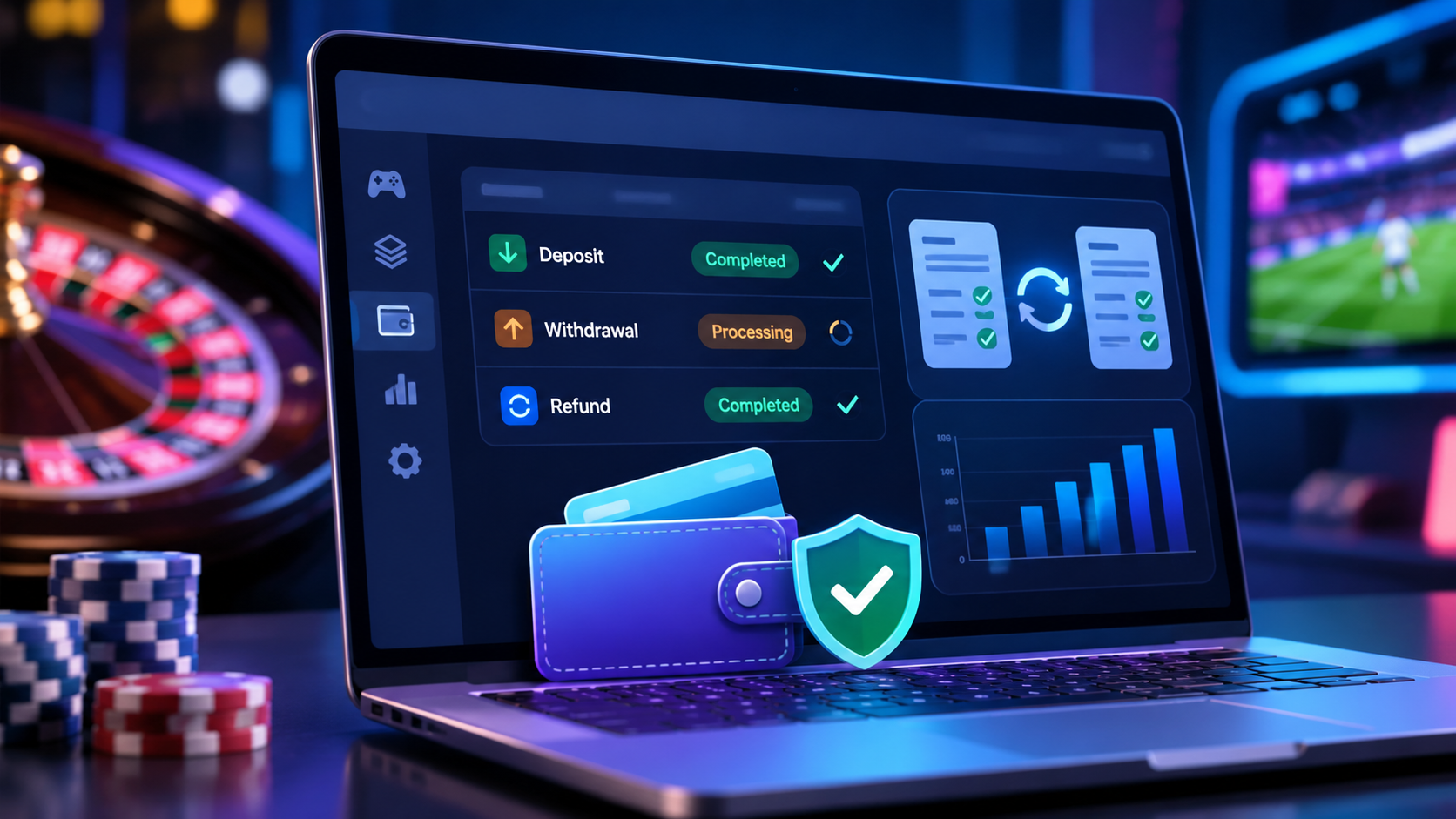
A payment can look straightforward from the player's perspective. They select a payment method, enter an amount, confirm the transaction and wait for their account balance to update.
Behind that short interaction, however, several things may be happening. The payment provider processes the request, the gaming platform receives a transaction response, the player's account is updated, and the operator records the activity for financial and operational purposes.
These systems do not always update at precisely the same moment.
A payment might be approved by a provider but remain pending on the platform. A withdrawal could require additional review, while a transaction report might contain information that does not immediately match the operator's internal records.
For an iGaming business handling hundreds or thousands of transactions, even small inconsistencies can create unnecessary work.
This is why iGaming payment reconciliation deserves more attention. It is not simply an accounting exercise. It is part of understanding how money moves through an online gaming operation and ensuring that the different systems involved are telling the same story.
Why Payment Records Do Not Always Match
Online gaming operators rarely depend on just one system to manage their financial activity. A typical payment environment may involve the gaming platform, cashier, payment gateway, payment service provider and internal reporting tools.
Each component has a different responsibility.
The payment provider handles the payment request, while the gaming platform manages the player's account and associated transaction activity. The operator also needs records that can be reviewed by finance, compliance and operational teams.
Problems can arise when information moves between these systems.
Consider a player who makes a deposit. The payment provider confirms the transaction, but a delayed response prevents the platform from immediately updating the player's balance. The player may retry the payment, creating another transaction that needs to be checked.
There are several possible outcomes: the original transaction eventually completes, the second request is declined, or both transactions require investigation.
Without clear transaction references and status information, identifying what happened can take considerably longer.
The same issue can occur with withdrawals, refunds, reversed payments and transactions that remain pending beyond their expected processing time.
For operators, the important question is not simply whether a payment succeeded. It is whether the transaction was recorded correctly across the systems involved.
What Does iGaming Payment Reconciliation Actually Involve?
Payment reconciliation means comparing transaction information from different sources to establish whether the records agree.
For an online casino or sportsbook, this typically involves reviewing payment activity against provider statements, transaction reports and platform records.
The process can include:
- Matching transaction references between the platform and payment provider.
- Checking whether the recorded amounts and currencies agree.
- Reviewing successful, pending, declined and reversed transactions.
- Identifying duplicate entries or missing records.
- Investigating differences between transaction dates and settlement dates.
- Documenting adjustments and unresolved discrepancies.
One detail worth understanding is that a successful payment does not necessarily mean the entire financial process is complete.
For example, a provider may approve a transaction before the corresponding funds are settled. Operators need to distinguish between authorization, processing and settlement rather than treating every successful status as interchangeable.
This distinction becomes particularly important when working with multiple providers, currencies and payment methods.
The Real Challenge Begins When Transaction Volumes Increase
A small gaming operation might initially manage its payment activity without much difficulty. The number of transactions is manageable, the team knows which providers are involved, and unusual cases can be investigated individually.
That approach becomes harder to maintain as the business expands.
More players mean more deposits and withdrawals. Additional payment providers introduce different reporting formats and processing arrangements. New markets can also bring different currencies, settlement schedules and payment requirements.
Eventually, the finance or operations team may spend more time collecting information than actually analyzing it.
This creates several practical challenges.
Limited transaction visibility
When payment information is distributed across different systems, employees may struggle to establish the current status of a transaction without checking multiple interfaces.
Longer investigation times
A missing payment reference or inconsistent transaction status can turn a simple inquiry into a lengthy investigation involving several teams.
Difficulty identifying recurring issues
If discrepancies are handled individually without proper documentation, recurring problems with particular payment methods or providers may go unnoticed.
Inconsistent reporting
Financial reports become harder to interpret when different systems use different transaction statuses, reporting periods or settlement dates.
These issues do not necessarily indicate that a payment platform is unreliable. They often highlight the need for better integration, clearer procedures and more consistent transaction monitoring.
How Operators Can Build a More Reliable Reconciliation Process
Good reconciliation starts with knowing what information needs to be compared.
For example, every transaction should ideally have a reference that allows the operator to trace it between the platform and the payment provider. Amounts, currencies, timestamps, payment methods and transaction statuses should also be recorded consistently.
From there, operators can establish a process that works with their transaction volume and business requirements.
Start With a Consistent Transaction Record
A transaction record should provide enough information for an authorized employee to understand what happened without having to reconstruct the entire payment journey.
Transaction IDs, player references, payment provider details, amounts, timestamps and status updates are particularly useful.
Consistent records make it easier to investigate discrepancies and identify transactions that need further attention.
Separate Processing Status From Settlement
One common source of confusion is treating payment approval and settlement as the same event.
They are not always identical.
A payment may be authorized or marked successful while settlement follows a separate schedule. Operators should understand how each payment provider defines its transaction statuses and ensure that internal reporting reflects those differences.
Establish an Exception-Handling Process
Not every transaction will follow the expected path.
Some payments may be duplicated, reversed, delayed or rejected. Instead of treating these cases as isolated problems, operators should establish a clear process for identifying, assigning, investigating and resolving them.
This also creates a useful record of recurring payment issues.
Review Payment Performance Regularly
Reconciliation should provide more than a list of matching transactions.
The information can help management understand which payment methods generate the most failed transactions, where delays commonly occur and whether particular providers require closer attention.
These findings can inform decisions about payment integrations, operational procedures and the overall cashier experience.
Why Platform Integration Matters
Payment reconciliation becomes unnecessarily complicated when the systems responsible for managing transactions operate independently.
An integrated iGaming environment helps connect the cashier, player accounts and back-office operations, giving authorized teams a more complete view of payment activity.
This is where the underlying platform architecture matters.
WiredKing provides iGaming payment integration, automated deposit and withdrawal workflows, and multi-currency functionality as part of its wider platform offering.
Its payment environment is designed to connect cashier activity with player accounts and back-office operations, rather than treating payments as an isolated feature.
Operators can explore WiredKing's iGaming payment integration solution to understand how payment methods and cashier workflows fit into the wider platform.
The iGaming back-office system is another important component. It provides an administrative environment for managing players, transactions, reporting and other operational activities.
For businesses planning to expand their gaming content, WiredKing's game API integrations provide an additional layer of connectivity within the platform.
The exact reporting, payment workflows and provider integrations available should be discussed during platform configuration. Reconciliation controls and accounting procedures also need to be established according to the operator's own requirements.
Payment Management Should Grow Alongside the Business
There is a tendency to focus on payment functionality when launching an online casino or sportsbook. Operators naturally want to know which payment methods are supported, how deposits work and how quickly players can withdraw their funds.
Those are important questions, but they are only part of the picture.
The ability to monitor transactions, investigate discrepancies and understand settlement activity becomes increasingly important as the business grows.
A payment environment should work for the player making the transaction and the team responsible for managing the operation.
Getting that balance right requires more than adding payment providers. It requires connected technology, reliable transaction information and procedures that can keep pace with the business.
For operators evaluating their next platform, these considerations are worth discussing before implementation rather than waiting until transaction volumes become difficult to manage.
Frequently Asked Questions
1. What is iGaming payment reconciliation?
It is the process of comparing payment transactions recorded by an iGaming platform with records from payment providers or other financial systems. The purpose is to identify discrepancies and maintain accurate transaction information.
2. Why do online casino payment records sometimes differ?
Differences can result from processing delays, duplicate payment attempts, reversals, settlement timing, missing transaction references or inconsistent status updates between systems.
3. What is the difference between payment processing and settlement?
Payment processing refers to handling the payment request and its authorization or completion. Settlement refers to the transfer of funds between the relevant financial parties. The timing of these events can differ depending on the provider and payment method.
4. How often should an iGaming business reconcile transactions?
The appropriate frequency depends on transaction volume, payment provider arrangements and internal financial controls. High-volume operations may require daily reconciliation and additional monitoring of unusual transactions.
5. Can an iGaming platform help with transaction management?
Yes. An integrated platform can connect payment activity with player accounts and back-office tools, making transaction information more accessible to authorized operational teams. Specific reconciliation and reporting capabilities depend on the platform configuration.
6. What should operators consider when choosing an iGaming payment solution?
Operators should evaluate supported payment methods, target-market availability, currencies, provider integrations, transaction visibility, deposit and withdrawal workflows, reporting capabilities and the ability to accommodate future operational requirements.
Build a Payment Environment That Supports Your Operation
Managing payments effectively is about more than processing transactions. Operators need to understand what happens after a player makes a deposit, how withdrawals move through the system and whether the information recorded across different platforms remains consistent.
WiredKing brings payment integrations, cashier functionality and back-office tools together within its wider iGaming technology environment.
If you are planning a new gaming operation or reviewing the infrastructure behind an existing one, the payment setup deserves a closer look.
Contact WiredKing to discuss your payment integration requirements and explore an iGaming platform built around your operational needs.